|
|

The mango originated in FIND OUT MORE
INTERESTING A comfort food. Mangos
really can make you feel better! Beyond being delicious and rich in vitamins,
minerals and anti-oxidants, mangos contain an enzyme with stomach soothing
properties similar to papain found in papayas.
These comforting enzymes act as a digestive aid and can be held partially
responsible for that feeling of contentment we experience during and after
our daily mango ritual. Yes, it is quite natural to crave those mangos! Mango, both in its green
and ripe form is a very good tenderizing agent due to these same enzymes,
therefore ideal to include in any marinade (see Mango Marinade under Sauces
category in our Recipe Guide). In We all know the importance
of fiber in our diets. If you are eating your mango-a-day, irregularity is
not a problem for you and so we'll spare the gruesome details regarding
constipation, piles and spastic colon. Research has shown that dietary fiber
has a protective effect against degenerative diseases, especially with
regards to the heart; may help prevent certain types of cancer, as well as
lowering blood cholesterol levels. An average sized mango can contain up to
40% of your daily fiber requirement. For those of you who are physically
active, whether working out or constantly on the go, mangos are also a great
way to replenish that lost potassium. Deliciously rich in anti-oxidants,
potassium and fiber - the mango is the perfect fruit! Truly 'the king of
fruit'.
Selecting
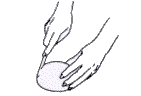
the ripeness of mangos can be determined by either smelling or squeezing. A
ripe mango will have a full, fruity aroma emitting from the stem end. Mangos
can be considered ready to eat when slightly soft to the touch and yielding
to gentle pressure, like a ripe peach. The best flavored fruit have a yellow
tinge when ripe; however, color may be red, yellow, green, orange or any
combination. The ideal post harvest storage temperature for mangos is 55º F.
When stored properly a mango should have a shelf life of 1 to 2 weeks. We
have found that the best way to ripen a mango is at room temperature, on the
kitchen counter and if you wish to accelerate the process place in a paper
bag overnight (some folks place an apple with the mango in the bag to create
more natural ethylene gas and further decrease the ripening time). Once
ripened the mango can be refrigerated for a few days, but should be used
shortly thereafter. |
|
||||||||||||||||||||||||||||||||||||||||||||||||